
Rockstar explains how GTA VI's varied characters share animations, and why it took its own team
· SixStash
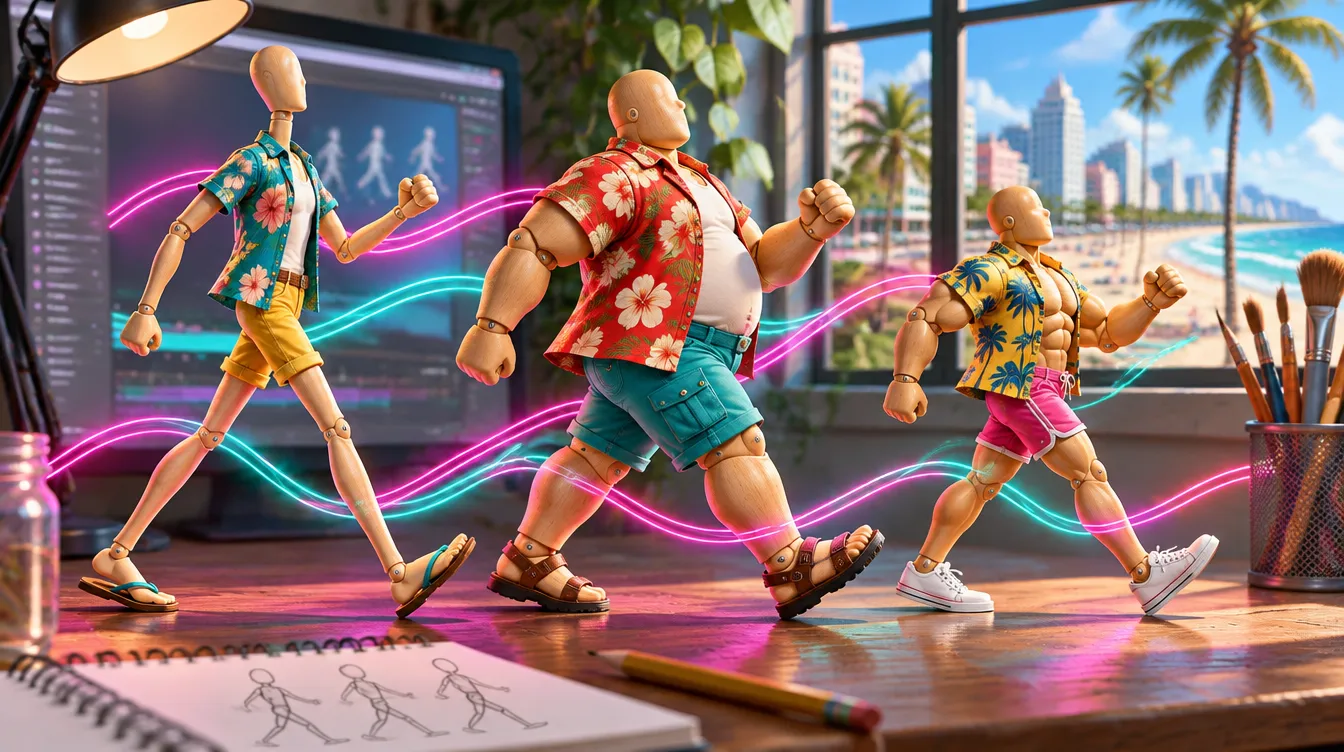
Developers describe how characters of different builds share animations in vehicles and hand-to-hand fights, and how people on the street get the same tech as Jason and Lucia.
The people of Vice City come in many sizes and builds, yet they share many of the same animations. Making that work took a dedicated team, PC Gamer reports. Creative Bloq and GamesBeat add further comments by the developers.
An early decision with consequences
Mark Tennant, Rockstar's vice president of animation, told IGN that the studio decided early in development to "push the variation in character sizes and body types". We could not read IGN's interview ourselves; PC Gamer quotes the relevant parts.
The problem behind it: an animation made for one body does not automatically fit another. Reach for a door handle with shorter arms and the hand ends up in the air. Tennant says the team needed "a very robust way to share animations between characters" that still gets several points of contact right. He names two examples: most interactions with vehicles, and grappling in hand-to-hand fights. (The door-handle picture is ours, to show the principle.)
Rockstar set aside a "traditional approach", PC Gamer reports, in favour of new techniques. It also built up a group just to oversee this, in close contact with the art and rigging departments. "It was a huge team effort," Tennant said.
No more second-class crowds
Valmor Garcia, senior technical art director, describes the second half of the change. In GTA V and Red Dead Redemption 2, he says, NPCs were "monolithic" and held to a lower visual bar than the main characters. The aim now, as Creative Bloq quotes him, is "fully fleshed-out characters" with their own anatomy, facial features and dialogue, driven by changing moods and personalities.
In development notes that Rockstar shared with the press before launch, GamesBeat reports, Garcia calls it the first game in which the studio feels it has brought the whole cast to a consistent visual level, including the people of the open world. The team created new technology and tools "from the ground up". Creative Bloq says they cover hair, cloth simulation and the customisation of heads and bodies, and that every character benefits from them, not just Jason and Lucia.
The variety does not stop at passers-by. According to the same notes, different looks for the player characters were a focus too, says David Vallance, lead artist for wardrobe and inventory.
The numbers
Tennant puts the everyday animations at close to a thousand sets for ambient activities, such as people hanging out or doing their jobs. On top come hundreds of specially made one-off events and sequences. PC Gamer had earlier reported around 600,000 animations for GTA VI's NPCs overall.
What you notice while playing
John Macpherson, senior design director for world and population, says that "everywhere you look, little stories constantly unfold". That can be someone's clothes, the way they walk and talk, or the music from a passing car. Creative Bloq's Ian Dean, who reviewed the game, describes people on the beach chatting on towels and playing frisbee, and a boat party whose guests danced and reacted to Jason and Lucia's moves.
It matches what others are praising. A former Rockstar artist called the game's art "generally stunning" over the weekend, and PC Gamer sees Rockstar's long-serving staff, in figures reported by Bloomberg, as one ingredient of its success.
A comparison with San Andreas
PC Gamer's Justin Wagner adds some perspective. GTA VI's body changes may not go as far as in GTA: San Andreas, at least around the waist, he writes. Pulling off this much variety at such a high visual level is the achievement he highlights. If you want to know how training changes your characters' stats, our guide to character stats has the details.
What is still unclear
The reports we read do not say how large the dedicated team was, how long the work took, or how the shared system works in detail. The developers' statements are also, naturally, a look back by the people who built it. How well the result holds up is something you can check yourself: stand at a corner in Vice City for five minutes and count how often you see the same person.